Polished Concrete Floors: Durable, Modern, and Low Maintenance
Polished concrete floors have become a favorite for both homeowners and commercial property owners—and for good reason. They offer a clean, modern look paired with impressive durability and low maintenance. To create a polished concrete floor, a contractor mechanically grinds an existing concrete surface until it achieves a smooth, reflective finish that ranges from soft satin to a near–mirror-like sheen.
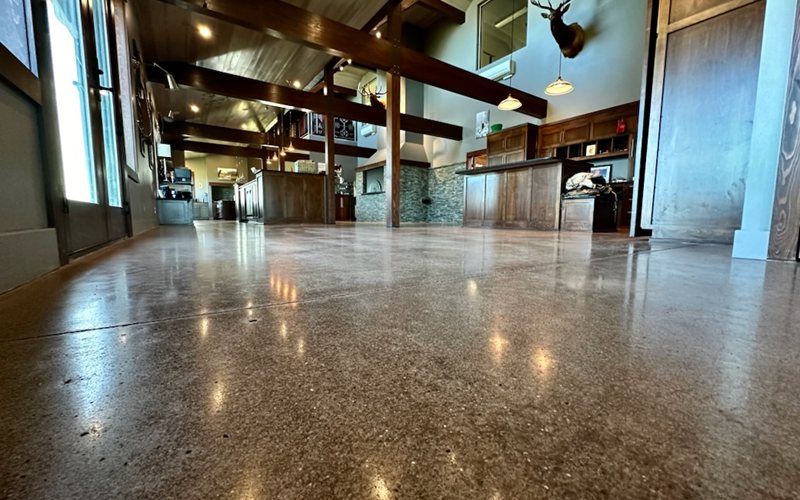
Pros and Cons of Polished Concrete Floors
Homeowners and commercial property owners enjoy the following qualities of polished concrete:
Pros of polished concrete floors
- Beautiful and customizable. Polished concrete gives a clean, modern look. Choose your level of shine and add stains or dyes to match your style.
- Durable and long-lasting. The polishing process hardens the surface, so it stands up well to heavy traffic and everyday wear. Properly maintained, it can last for decades.
- Easy to maintain. No waxing, stripping, or frequent refinishing needed. Just dust mop regularly and occasionally wet clean with a neutral cleaner.
- Allergy-friendly. With no fibers or grout lines to trap dust, pet dander, or allergens, polished concrete creates a cleaner indoor environment.
Cons of polished concrete floors
- Flaws may be visible. Cracks, patches, and natural variations can show through once polished. Many property owners appreciate this as part of the floor's natural, industrial character.
- Higher upfront cost. Polishing requires specialized equipment and skilled labor. However, the long lifespan and minimal maintenance often offset the initial investment.
- Hard and cold underfoot. Concrete is naturally firm and can feel cool. In warm climates, this is a benefit. Add area rugs or radiant heating for comfort in colder regions.
- Potentially slippery. A highly polished surface can be slick, but contractors can add anti-slip additives or adjust the polish level to improve traction.
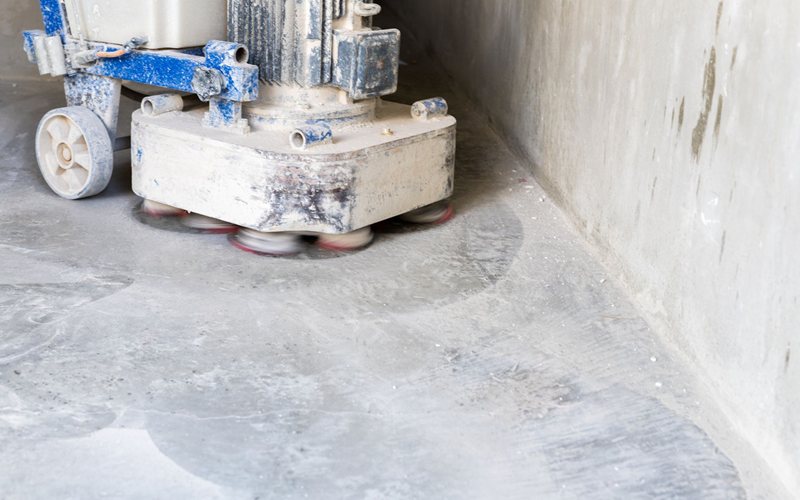
How to Polish Concrete Floors
A polished concrete floor is created through a multi-step grinding and polishing process that refines the concrete surface and enhances its natural strength. While each project may vary slightly, here’s a simplified overview of how it’s done:
- Coarse grinding: The process begins with coarse grinding to remove surface imperfections such as blemishes, stains, and light coatings. This step levels the surface and prepares it for refinement.
- Fine grinding and polishing: Progressively finer grits are then used to smooth the surface and build the desired level of shine. Higher grit levels produce a more reflective, glossy appearance.
- Densifying and sealing: During polishing, a penetrating (impregnating) sealer and densifier are applied. The densifier reacts with the concrete to harden and strengthen the surface from within, while also making it less porous and easier to maintain. The sealer provides additional internal protection against moisture and stains.
Before grinding begins, proper preparation is essential. Any dirt, grease, adhesives, or existing coatings must be removed, and cracks or surface damage should be repaired to ensure the best possible finished appearance.
Can You Polish a New Concrete Slab?
Yes, new concrete can be polished—but timing matters. Typically, you’ll need to wait about 30 days after the slab is poured to allow it to cure properly before grinding begins. Your contractor can assess the slab and recommend the ideal timeframe based on site conditions and the concrete mix used.
Can Damaged Floors Be Polished?
In some cases, yes. Many property owners appreciate the character that minor cracks or surface variations can bring to polished concrete. However, excessive damage may interfere with the final appearance. An experienced contractor can evaluate your floor and determine whether polishing will deliver the results you want.
Related: Polished Concrete or Resurfacing - Which Is Right for Your Floor?
If polishing isn’t the best option, resurfacing may be a better solution. With concrete resurfacing, a new decorative coating is applied to conceal imperfections. Contractors like SUNDEK can also use specialized techniques to replicate the look of polished concrete while providing a fresh, uniform surface.
Are Polished Concrete Floors Durable?
Absolutely. Polished concrete floors are known for their exceptional durability. They resist wear and tear, handle moisture well, and are less prone to staining than many other flooring options. When properly maintained, polished concrete can last for decades, even in high-traffic residential or commercial spaces.
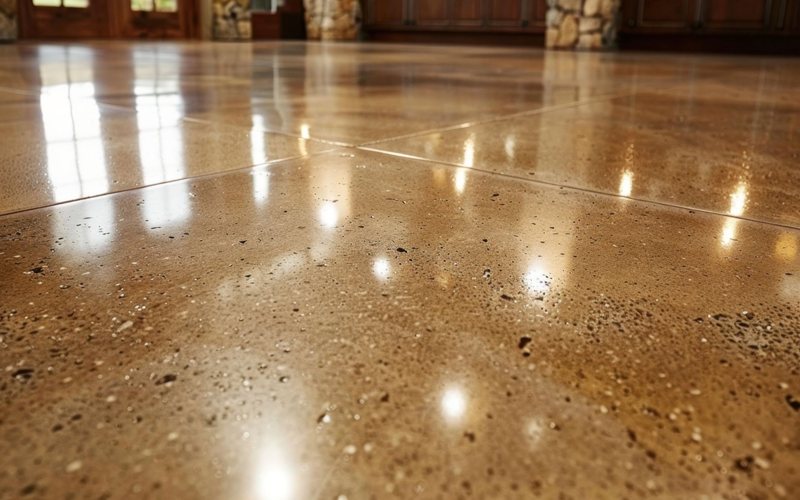
Levels of Polishing
Polishing can create anything from a smooth, matte look to a mirror-like finish.
- Level 1 (Flat): The surface is smooth but matte with little to no shine or reflectivity.
- Level 2 (Satin): A soft, satin-like look with subtle sheen. Faint reflections from overhead lighting may be visible from a distance.
- Level 3 (Semi-Polished): A noticeably brighter surface with moderate gloss. Lighting and surrounding elements reflect clearly from 30 to 50 feet away.
- Level 4 (Highly Polished): A mirror-like finish with sharp, well-defined reflections. The floor can appear almost wet from different angles.
Polishing vs. Burnishing
Both methods create a smooth, sleek surface, but they work differently.
- Polishing physically grinds away the top layers of concrete. A contractor applies a chemical hardener to densify the concrete, then uses diamond-segmented abrasives to grind the surface until reaching the desired gloss level.
- Burnishing doesn't remove concrete—it adds a coating on top. A contractor applies a chemical coating, then uses a high-speed burnishing machine (1,500 to 2,500 RPM) to heat, melt, and buff the coating into the concrete's pores. This creates a glossy, satin-like sheen.
Burnishing is often more cost effective than polishing, but can't achieve the same level of light reflectivity. Both approaches give you a beautiful, easy-to-maintain floor.
Polishing vs. Staining
Both enhance existing concrete floors, but in different ways.
Polishing: A mechanical process that grinds and smooths the surface to increase strength and create sheen. The result is highly durable, moisture-resistant, and low maintenance.
Staining Adds rich, permanent color, from subtle earth tones to bold hues, without peeling or chipping. It's less expensive than polishing since it doesn't require specialized equipment.
Polishing emphasizes performance and sheen, while concrete staining emphasizes color and visual impact. You can also combine both: stain your concrete first, then polish it to add color with shine.
How to Maintain a Polished Concrete Floor
Even though polished concrete floors are known for their durability or longevity, they need to be maintained to preserve their beauty. Here are steps to take to care for your polished concrete surface:
- Remove loose debris regularly. Use a microfiber dust mop each day to pick up grit and fine particles before they can scratch the surface or dull the shine.
- Use clean tools and water. When wet cleaning, start with fresh water and clean mops. For larger spaces, an auto scrubber with a non-abrasive pad is ideal; smaller areas can be cleaned with a traditional mop and bucket.
- Choose the right cleaner. Apply a neutral, pH-balanced floor cleaner designed to lift and hold dirt so it can be fully removed, rather than pushed around the floor.
- Address spills promptly. Wipe up spills and stains as soon as they occur to prevent absorption and discoloration.
- Allow cleaners time to work. Let the cleaning solution sit briefly to break down grease and grime before mopping or vacuuming it away.
- Prevent residue buildup. Clean in manageable sections and don’t allow the cleaning solution to dry on the surface before it’s fully removed.
How Much Do Polished Concrete Floors Cost?
The cost of polished concrete floors varies depending on several factors, including the condition of the existing concrete, the level of grinding required, and whether color, patterns, or decorative elements are added. In general, polished concrete floors typically range from $3 to $12 per square foot, making them a competitive option for both homes and businesses looking for a long-lasting, modern flooring solution.
If you have questions or would like to discuss your project, contact a local dealer.
Your Local Contractor:
Unfortunately:
We currently do not have a local installer in your area.